Beyond Blender: Niche Tools and Techniques for Indie 3D Artists

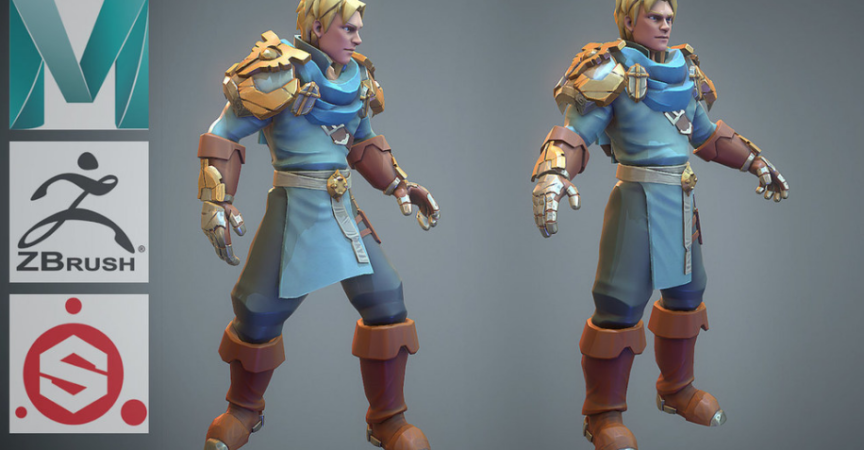
In the past decade and a half, the landscape of 3D creation has transformed dramatically. Long gone are the days when Maya or 3ds Max were the only professional-grade options—and gone, too, is the notion that powerful 3D pipelines must break the bank. Today’s indie artists can choose from a diverse ecosystem of lightweight, specialized apps that fit their budgets, hardware, and project needs. As someone who cut my teeth on Softimage back in 2008 and now ships live-demo AR filters built in Nomad Sculpt and Unreal Engine, I’ve tracked every step of this evolution. Here’s a guided tour of the most compelling “beyond Blender” tools - gfx-hub.co, and workflows for your next passion project.
The Evolution of Indie 3D Tooling
In the 2008–2012 “Big Four” era, studios depended on Maya, 3ds Max, and Softimage—often saddled with expensive licenses and steep learning curves. Open-source experiments like Wings3D offered glimpses of affordable alternatives, but they lacked polish.
Between 2013 and 2018, a new breed of “prosumer” apps emerged. Modo Indie democratized polygonal modeling, SketchUp Pro found favor in architecture, and the first mobile sculpting experiments appeared—Nomad Sculpt quietly launched on iPad, promising true on-the-go sculpting.
Since 2019, the trend accelerated: GPU-driven sculptors like ZBrushCore+ and real-time look-dev suites such as ArmorPaint have further lowered the barrier to entry. Indie licenses now pack professional power without the corporate price tag.
Modeling & Sculpting: Finding the Right Fit
Polygonal Modeling Alternatives
- Modo Indie combines speed and an artist-friendly interface. On a VR jewelry project for a 2021 tech expo, I modeled dozens of intricate rings in record time, directly exporting topology to Unreal for AR previews.
- Maya LT offers a slimmed-down feature set at a small fraction of the cost—ideal for mobile-game prototyping.
- Silo keeps things laser-focused: its streamlined toolkit excels at hard-surface blocking and early concept phases.
Digital Sculpting on Any Device
- Nomad Sculpt turns your tablet into a portable sculpting studio. I once shaped a stylized character bust during a transatlantic flight—Polymesh details intact.
- ZBrushCore+ delivers scaled-down ZBrush power for under $200, perfect for freelancers or students.
- 3D Coat’s Sculpt Room merges voxel sculpting with UV and retopo tools, so you never have to bounce between apps.
Texturing & Look-Development: Beyond Substance
Open-Source and Standalone Painters
- ArmorPaint brings PBR texturing to your desktop—subscription-free and lightning-fast. On my “Neo-Kyoto” sci-fi scene, ArmorPaint’s live layering saved me hours compared to manual Photoshop masks.
- Material Maker uses node graphs to generate procedural materials. Its non-destructive workflow is a boon when you want endless variation without rebuilding textures from scratch.
Procedural & Hybrid Authoring
- Substance Designer Indie remains the gold standard for procedural authoring—worth the investment if you produce frequent, high-detail surfaces.
- Quixel Mixer offers free Megascans asset access and a painterly blend workflow that’s intuitive for artists coming from Photoshop backgrounds.
- When comparing node-based vs. layer-based tools, consider whether you need tight procedural control (Designer) or quick hand-painted tweaks (Mixer, ArmorPaint).
Rendering Engines: Speed, Quality, and Access
GPU-Accelerated Path Tracers
- Radeon ProRender integrates into Blender, Maya, and 3ds Max—giving you free GPU acceleration across multiple hosts.
- LuxCoreRender is an open-source spectral engine that faithfully simulates real-world light. For an indie short film project last year, LuxCore’s caustics and volumetrics added cinematic realism without breaking my budget.
Real-Time Preview & Production
- Unreal Engine and Unity HDRP/URP now double as production renderers. I’ve composited architectural fly-throughs directly in Unreal, cutting post-render times in half.
- Blender Eevee remains a fast preview option; for client-friendly turntables, tools like Marmoset Toolbag and Sketchfab fill the gap with polished web exports.
Pipeline Integration & Interchange Formats
- USD & Alembic form the backbone of a future-proof, multi-app pipeline. I routinely export animation from 3D Coat into Unreal via Alembic, preserving vertex-level simulations.
- Live-link setups (e.g., Blender ↔ Unreal) let you tweak models or cameras in one app and see instant updates in another—a game-changer for remote art passes.
- Version control for binary assets is easier than ever: Git LFS or lightweight Perforce servers keep your textures and models in sync across teams.
Community, Learning, and Free Resources
Niche apps each have vibrant Discord servers and forum hubs, where creators share tips, scripts, and shaders. Free asset libraries like KitBashing.me or BlenderKit offer high-quality models and materials under open licenses. For tutorials, micro-creators on YouTube and bundled Udemy indie courses often dive deeper into these smaller tools than mainstream channels.
Case Study: Building a Stylized Character with a “Mixed” Stack
- Blocking in Silo: Rough shapes and proportions
- Detail sculpt in Nomad Sculpt: Organic forms on the go
- UVs and retopo in 3D Coat: Clean topology for animation
- Texture in ArmorPaint + Quixel Mixer mash-up: PBR layers plus photogrammetry overlays
- Render passes in LuxCore + composite in DaVinci Resolve: Final polish and color grading
This pipeline let me craft a hero character for a mobile title “Skyward Knights” in under two weeks—proof that indie stacks can rival studio pipelines.
Conclusion & Recommendations
Choosing the right indie toolkit depends on your project scope, budget, and hardware constraints. If you need procedural control, invest in Substance Designer Indie; if portability is key, lean on Nomad Sculpt. Keep an eye on AI-assisted sculpting and cloud-based pipelines—they’ll reshape workflows in the next few years. Above all, balance experimentation with mastery: pick a core tool, learn it inside out, then expand with these niche apps to level up your creativity—without blowing your wallet.
 Винница
 Днепр
Днепр ДонецкДрогобич
 Житомир
 Запорожье
 Ивано-Франковск
 Каменское
 Киев
Киев Кривой Рог
 Кропивницкий
 Луганск
 Луцк
Луцк Львов
Львов Макеевка
 Мариуполь
 Николаев
 Одесса
 Полтава
 Ровно
Ровно Севастополь
 Симферополь
 Сумы
Сумы Тернополь
 Ужгород
 Харьков
 Херсон
 Хмельницкий
 Черкассы
 Чернигов
 Черновцы